8 practical strategies that help answer the question of how to reduce time to hire


TL;DR
- Define clear roles and responsibilities to attract qualified candidates faster.
- Align hiring managers early to prevent bottlenecks and delays.
- Craft job adverts that target suitable candidates efficiently.
- Use structured screening, assessments, and AI candidate screening tools to filter applicants.
- Streamline interview processes and automate scheduling to accelerate the hiring cycle.
- Build talent pipelines and proactively engage potential candidates.
- Enhance employer branding and candidate experience to reduce candidate drop-off.
- Leverage AI tools, digital platforms, and specialist agencies to reduce the time required to hire an employee.
Introduction: Why reducing time to hire is critical
Slow recruitment processes can lead to losing top talent, increased costs, and added pressure on existing teams. Understanding how to reduce time-to-hire is essential for HR leaders and recruitment teams who aim to secure qualified candidates quickly while maintaining a positive candidate experience.
A well-defined hiring strategy is crucial for maintaining efficient business operations, especially in sectors with high staff turnover or critical roles. The benefits of reducing time-to-hire not only improve efficiency but also enhance employer brand and ensure that hiring managers can focus on interviewing top candidates rather than administrative tasks. Measuring time-to-hire helps identify bottlenecks and improve the entire process, from talent sourcing to interview design. Long hiring times can negatively impact the candidate experience and the company’s reputation. By applying structured strategies and leveraging AI and digital tools, organisations can reduce average time to hire without compromising the quality of hires.
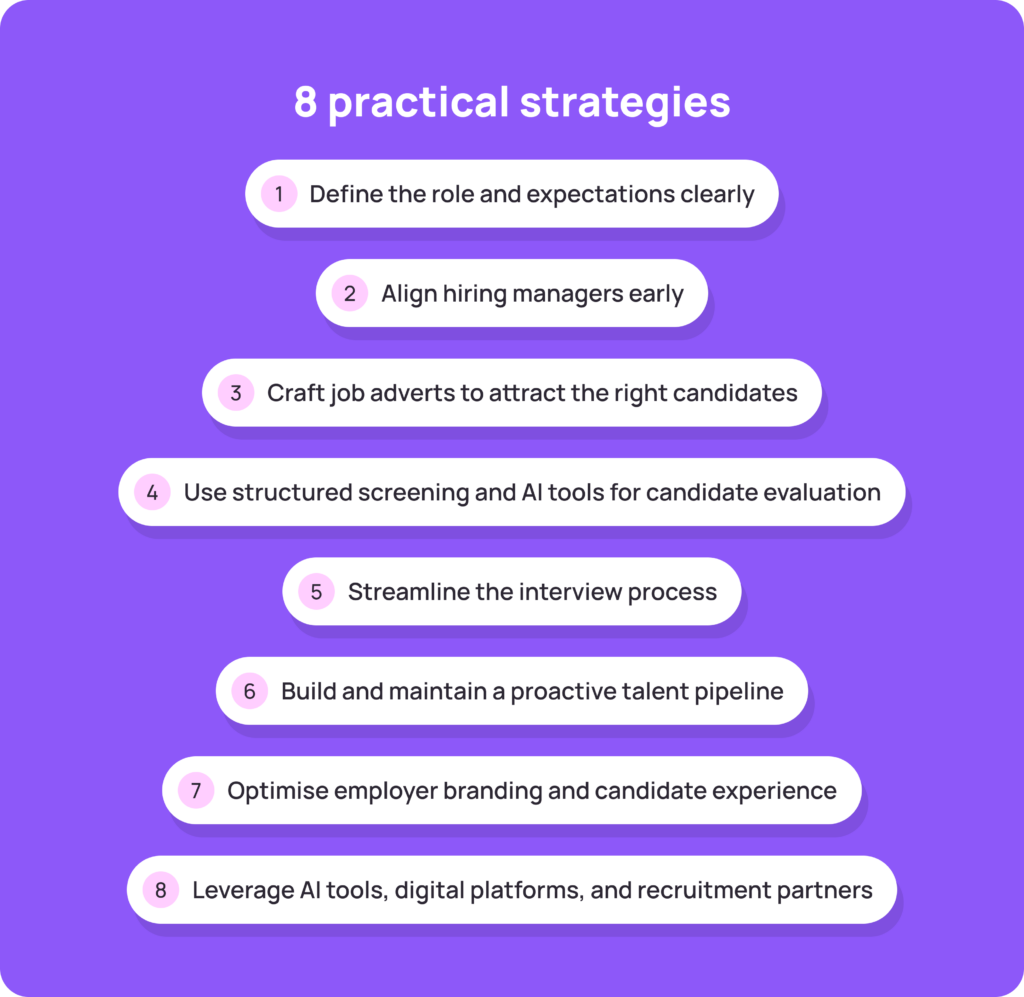
1. Define the role and expectations clearly
Start by establishing a clear job description, required skills, and performance criteria. Well-defined roles attract genuinely qualified candidates and reduce time spent screening candidates who are unfit for the role.
Implementing a structured hiring process helps clarify expectations for both recruiters and applicants, leading to a more efficient and transparent candidate journey. This approach also improves alignment among hiring managers, ensuring that recruitment teams have a clear framework for evaluating applicants and making faster decisions.
2. Align hiring managers early
Delays often occur when hiring managers are unclear about job requirements or evaluation methods. Establish alignment early in the recruitment process by agreeing on:
- Candidate competencies and key skills
- Assessment criteria and evaluation metrics
- Interview stages and decision-making timelines
Early alignment ensures smoother collaboration, preventing bottlenecks and supporting reducing time-to-hire initiatives.
3. Craft job adverts to attract the right candidates
A well-crafted job ad is crucial for attracting both active and passive candidates. By clearly outlining the role and showcasing your employer brand, you can attract passive candidates who may not be actively looking but are drawn in by your company’s reputation and culture. Include:
- Specific role requirements and responsibilities
- Key competencies and experience needed
- Details that highlight company culture and benefits
- Craft lucrative perks to make the job ad more attractive and competitive
A well-designed careers page and job ad can reduce drop-offs and increase applications from top talent by effectively showcasing your company culture and values, ultimately speeding up your time to hire.
Optimised job adverts can improve candidate engagement, reduce candidate drop-off, and ensure that applications are from promising applicants rather than unqualified candidates.
4. Use structured screening and AI tools for candidate evaluation
Structured screening and AI-enabled tools, like AI-powered candidate screening tools help screen applicants efficiently while maintaining fairness and consistency. By expanding and refining both the candidate pool and talent pool, structured screening ensures a broader and more qualified selection of candidates. Pre-screening and assessment tools also reduce the need to spend time vetting each candidate individually, streamlining the hiring process. Techniques include:
- Skills assessments and cognitive tests
- Structured video interviews
- AI-assisted resume analysis and scoring
- Automating the initial screening phase reduces the administrative burden on HR teams and introduces objectivity into the evaluation process.
- Modern ATS systems utilise AI-powered features such as automated resume screening and intelligent candidate ranking to speed up hiring decisions.
- A well-optimised ATS can reduce manual screening time by 70-80%, improving candidate quality through better matching.
Platforms such as Sapia.ai provide mobile-friendly structured interviews, automated scheduling, and explainable scoring, enabling recruiters to prioritise candidates based on job-related criteria rather than CV bias.
5. Streamline the interview process
Too many stages in the interview process can cause delays and increase candidate drop-off. To reduce time-to-hire, consider:
- Reducing interview rounds to two or three maximum to streamline the hiring process
- Utilizing structured two-stage interviews to reduce time-to-hire and avoid candidate drop-off
- Using panel interviews to gather multiple perspectives, reducing the need for repetitive individual interviews
- Leveraging video interviews for flexible scheduling, which helps work around candidates’ current obligations and accelerates the process
- Implementing self-scheduling tools to streamline scheduling interviews and eliminate back-and-forth, reducing scheduling time from days to hours
- Combining interviews when possible
- Using AI scheduling assistants to automate interview scheduling
Streamlined processes allow hiring managers to focus on candidate evaluation and make faster, more informed hiring decisions.
6. Build and maintain a proactive talent pipeline
Talent pipeline building is a proactive recruitment strategy that enables organizations to reduce average time to hire when roles open. Use strategies such as:
- Sourcing candidates in advance to reduce delays in the hiring process
- Maintaining a database of previous applicants
- Nurturing passive candidates through targeted recruitment campaigns to engage and assess potential hires
- Leveraging AI-driven sourcing to match qualified candidates to open positions
- Maintaining relationships with former employees, which can significantly reduce onboarding time and costs
While there is an initial investment of resources, time, and personnel required to build a robust talent pipeline, the long-term benefits include faster hiring and improved efficiency. Building a talent pipeline also allows employers to stay connected with professionals who may be interested in future opportunities, ensuring a steady pool of pre-qualified candidates.
A strong talent pipeline ensures that organisations can fill roles quickly with candidates who are already familiar with the company, reducing the need for repetitive sourcing.
7. Optimise employer branding and candidate experience
An effective employer brand attracts top talent, helps attract passive candidates, and draws in individuals who are genuinely interested in your company and its values. This results in a pool of higher quality applicants. Key actions include:
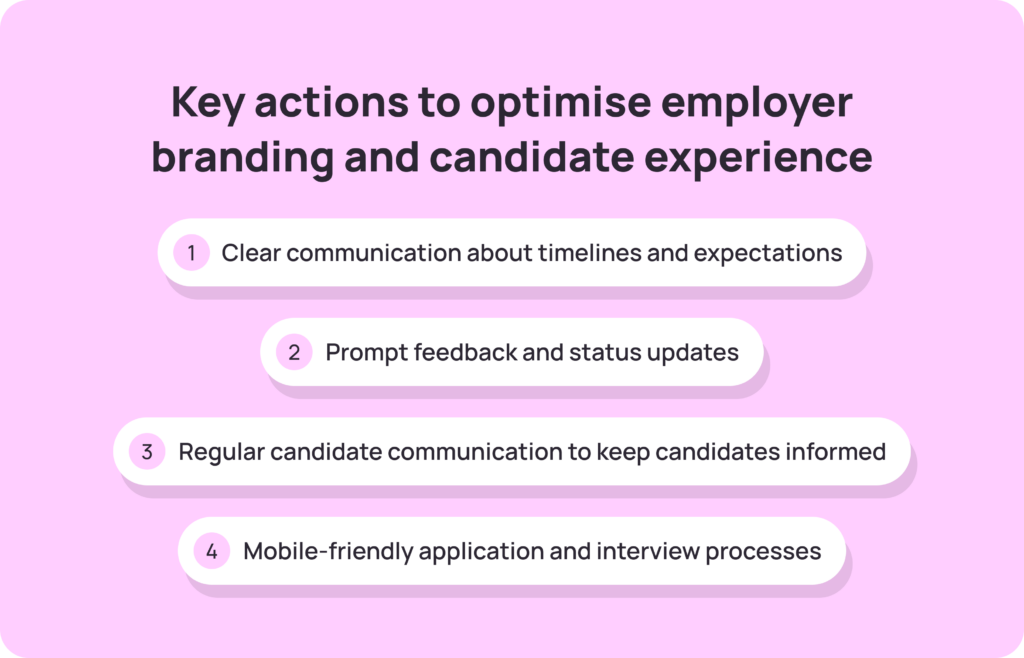
- Clear communication about timelines and expectations
- Prompt feedback and status updates
- Regular candidate communication to keep candidates informed, demonstrate respect, and reduce anxiety
- Mobile-friendly application and interview processes
Managing your online reputation on platforms like Glassdoor allows you to address concerns and showcase positive employee experiences, influencing potential candidates’ perceptions.
A positive candidate experience minimises frustration and encourages applicants to complete the process, leading to higher completion rates. Building a strong employer brand and optimising the candidate experience is an ongoing effort that requires continuous investment of time and resources. A strong employer brand also builds trust and credibility, enhancing your reputation in the industry and attracting top talent.
Positive experiences reduce candidate drop-off, improve acceptance rates, and enhance the reputation of the organisation in the job market.
8. Leverage AI tools, digital platforms, and recruitment partners
AI tools and digital hiring platforms accelerate multiple stages of the recruitment process. Investing in a good application tracking system (ATS) is crucial for a faster time to hire, as it streamlines and automates the hiring process from job posting to applicant management and interview scheduling. Optimising ATS can significantly enhance the hiring process by automating and simplifying recruitment tasks. A good ATS helps automate the recruitment process from application to onboarding, reducing time to hire. Key benefits include:
- Automated candidate screening and pre-assessments
- Predictive analytics to identify the most suitable candidates
- AI-driven scheduling to reduce back-and-forth
- Structured evaluations that maintain consistency and fairness
Partnering with specialist recruitment agencies can also provide immediate access to pre-qualified talent, further reducing time to hire.
Application process optimisation: Removing bottlenecks before candidates apply
Now you know how to reduce average time to hire, the next step is optimising the application process; a critical step in reducing time to hire and ensuring a positive candidate experience. Hiring managers can make a significant impact by simplifying the application process, removing unnecessary fields, providing clear instructions, and ensuring the system is intuitive for potential candidates. A streamlined application process not only encourages more qualified candidates to apply but also prevents drop-off from frustrated applicants.
Implementing a robust applicant tracking system (ATS) further enhances efficiency by automating repetitive tasks, tracking candidate progress, and enabling hiring teams to quickly identify and engage with the most promising applicants. By focusing on application process optimization, organizations can attract a wider pool of qualified candidates, save valuable resources, and accelerate the entire recruitment process from the very first step.
Leveraging existing teams: Involving current employees to accelerate hiring
Engaging current employees in the hiring process can dramatically improve recruitment outcomes and reduce time to hire. Hiring managers who leverage existing teams benefit from employee referral programs, which tap into trusted networks to surface qualified candidates who are more likely to be a strong fit for the company culture. Referrals often result in faster hires and higher retention rates, as referred candidates tend to be more engaged and better informed about the organization.
Additionally, involving employees in crafting job descriptions and participating in interviews provides valuable insights into the day-to-day realities of the role, helping to attract relevant candidates and set accurate expectations. By making the most of existing teams, hiring managers can enhance candidate quality, accelerate the recruitment process, and foster a sense of ownership and engagement among current staff.
Competitive advantage: How faster hiring wins top talent
In today’s competitive hiring environment, the speed of your recruitment process can be the difference between securing the best candidates and losing them to competitors. Companies that prioritize reducing time to hire gain a clear competitive advantage by moving quickly to engage and secure top talent. Efficient hiring teams use data-driven hiring strategies, streamlined workflows, and technology to minimize delays and keep candidates engaged throughout the process.
A faster hiring process not only improves candidate experience but also strengthens your employer brand, making your organization more attractive to high-caliber applicants. By reducing recruitment costs and filling job openings swiftly, businesses can maintain momentum in their operations and ensure they don’t miss out on the best candidates. Ultimately, a commitment to hiring speed and efficiency positions your company as a leader in talent acquisition and business performance.
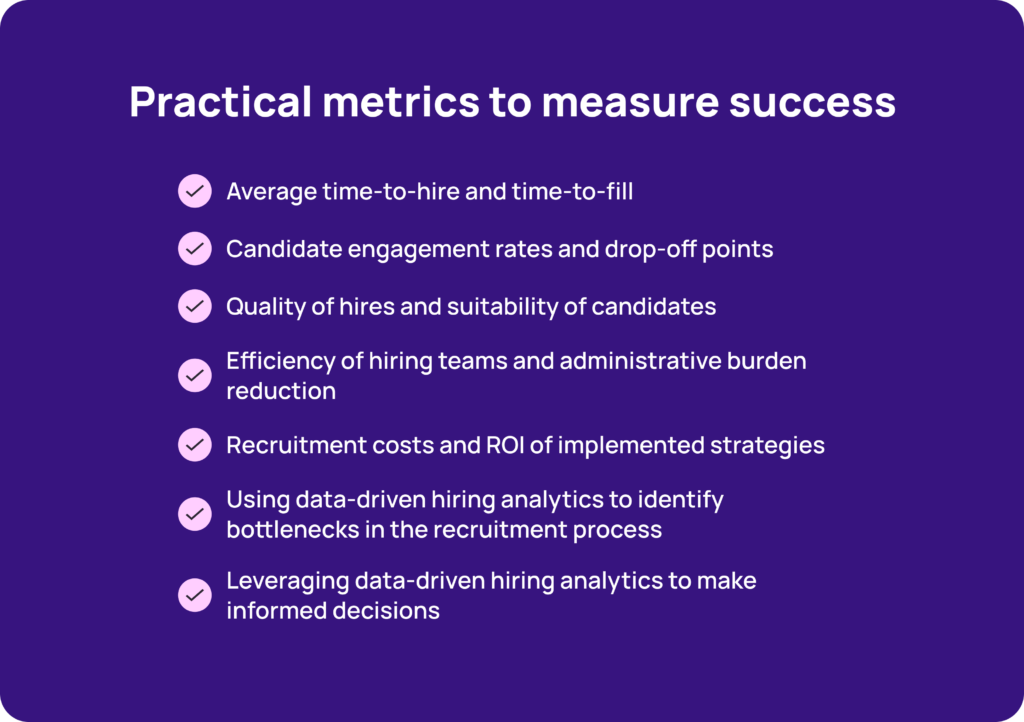
Practical metrics to measure success
To ensure your strategies are effective, it’s crucial to measure time to hire and track metrics such as:
- Average time-to-hire and time-to-fill
- Candidate engagement rates and drop-off points
- Quality of hires and suitability of candidates
- Efficiency of hiring teams and administrative burden reduction
- Recruitment costs and ROI of implemented strategies
- Using data-driven hiring analytics to identify bottlenecks in the recruitment process and visualize the candidate journey, including where candidates drop off
- Leveraging data-driven hiring analytics to make informed decisions, track improvement over time, and measure the impact of your interventions
Using dashboards and analytics enables continuous improvement, helping organisations reduce your time to hire across multiple roles and departments.
Sapia.ai perspective: Streamlining recruitment with AI
Sapia.ai combines AI-driven assessments, structured interviews, and automated scheduling to reduce the recruitment cycle while ensuring fairness and human oversight. Features include:
- Explainable scoring for actionable insights
- Mobile-first candidate experience
- Integration with applicant tracking systems (ATS) and HR software
- Predictive analytics to prioritise candidates for high-volume hiring
By embedding these tools into the recruitment process, HR leaders can implement ways to reduce time to hire while maintaining high candidate quality and engagement.
Conclusion
Reducing time-to-hire requires a combination of structured processes, proactive sourcing, technology, and human oversight. By defining roles, aligning hiring managers, leveraging AI tools, streamlining interviews, and building talent pipelines, organisations can achieve reduced time to hire without compromising the candidate experience or quality of hire.
Sapia.ai exemplifies how AI-powered platforms can optimise recruitment, combining assessments, scheduling, and analytics in a single solution. Organisations that adopt these strategies gain a competitive advantage, improve hiring efficiency, and ensure consistent, high-quality outcomes across their recruitment processes.
FAQs
It allows organisations to secure top talent, reduce recruitment costs, and improve candidate experience in today’s competitive hiring market.
AI tools streamline candidate screening, automate interview scheduling, and provide predictive insights to accelerate hiring decisions.
Time-to-hire measures the duration from a job being posted to candidate acceptance, while time-to-fill tracks the total time to onboard a new hire. Both metrics help identify bottlenecks and improve efficiency.
Use structured screening, skills assessments, and AI-assisted candidate evaluation to standardise evaluation and support fair, informed hiring decisions.
AI recruitment platforms are particularly useful for high-volume hiring, complex roles, and organisations seeking to enhance candidate engagement while reducing administrative workload.
Proactively maintained pipelines of qualified candidates reduce delays by allowing suitable candidates to be contacted and assessed as soon as positions open.
About Author