Career coaching for professionals: Evidence-based strategies to progress faster

TL;DR
- A career coach for professionals guides mid-career candidates from uncertainty to clarity, so they can turn their career aspirations into their reality.
- Structured, evidence-based coaching (including Sapia.ai’s conversational career coach) accelerates role alignment and progression towards the job you actually want.
- After coaching, candidates gain confidence, make measurable progress toward their goals, and receive actionable next steps to secure the right opportunities. These benefits matter more than ever with the rise of UK unemployment.
What career coaching for professionals actually is (and why it matters)
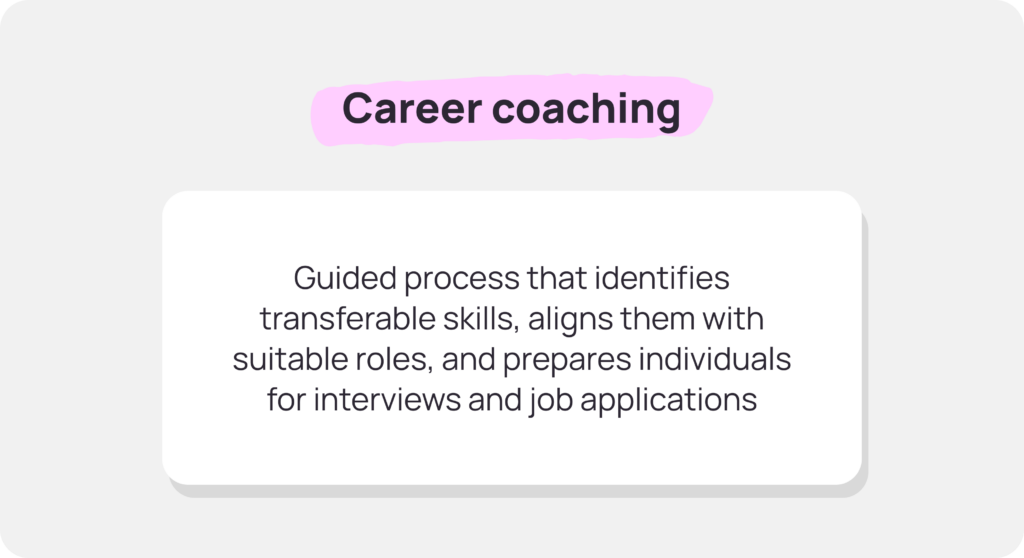
Career coaching for professionals is guided, evidence-driven support that combines competency insights, structured practise, and actionable feedback. It’s not therapy or a CV rewrite service. It’s a process that helps you understand your professional qualifications.
The need for people and/or AI tools with top-level coaching skills is apparent. Unemployment is rising in the UK. There’s more competition for every role.
If you feel stuck between where you are and where you want to be, you’re not alone. Research from Sapia.ai’s analysis of over 1,000 real career coaching conversations found that 43% of users were mid- to late-career professionals, proving that the hunt for fulfilling work is universal.
At the end of the day, the best coaching professionals produce concrete outcomes: Clear role targets, structured steps to reach them, faster career progression that reduces stress.
Scalable, conversational tools like Sapia.ai’s Phai Career Coach make this kind of personalised guidance more accessible than ever. We built our platform on peer-reviewed personality research and data science, and specifically designed it for career coaching, not generic chats.
How it works: Evidence-driven, repeatable coaching
Effective career coaching follows a repeatable structure. Whether you work with a human coach or an AI-powered tool, the core process looks like this.
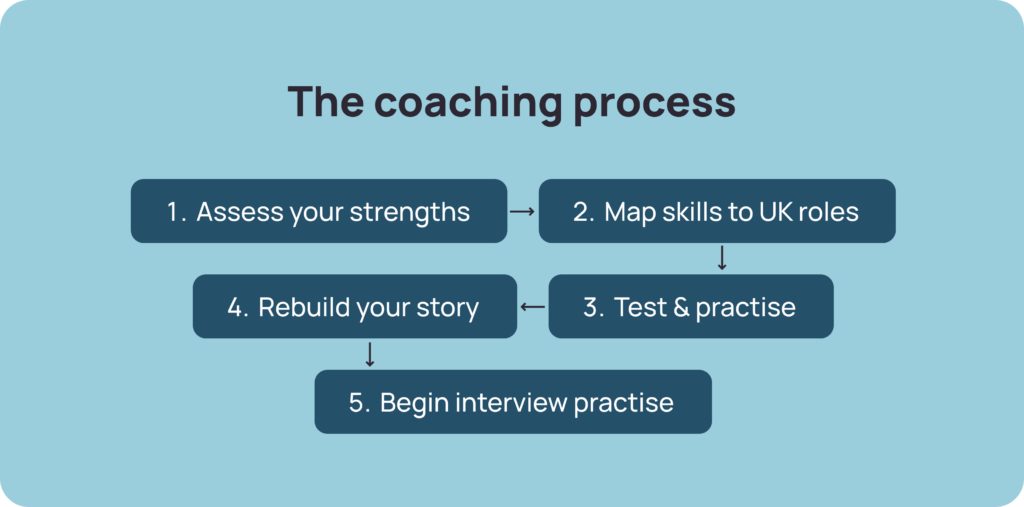
1. Assess your current capabilities
First, inventory your achievements, the measurable impact you’ve had, and the transferable skills you’ve built across roles. Then, honestly identify the gaps between where you are now and what your target roles require. This step creates a baseline. Without it, everything is guesswork.
2. Map skills to realistic UK roles
Once you understand your value, convert your abilities into specific role targets. Think across sectors: technology, creative, finance, healthcare, sales. Then, if you’re in the UK, apply specific anchors, like location, seniority level, licensing requirements, and DBS checks. This exercise will not only make your job search easier, but help you pinpoint areas for professional development.
3. Test assumptions and practise scenarios
This is where coaching becomes active. Run micro-experiments: Informational calls with people in the roles you want, small projects that build proof of your abilities, and role-specific practise to build interview skills. Then, measure early traction. Are you getting responses? Securing interviews? Receiving positive feedback? These signals give you greater self awareness.
4. Build a positioning story
At this point, you develop a three-line narrative to clarify your capability, the evidence behind it, and your next step. Then, you update your CV, LinkedIn, and other professional profiles to reflect your story. Human Resources (HR) pros should see the same person across all touchpoints.
5. Structured practise and feedback
Finally, practise answering behavioural and situational questions that align with your target roles. Your answers should lead with outcomes you’ve achieved, actions you took, and supporting context.
Also worth mentioning, your answers should be between 90–120 seconds, which a regular coaching practice via Phai Career Coach will help with. Book a demo to see our tool in action.
We suggest tracking examples too, iterating on the weak ones, and building a bank of answers you can deliver under pressure. Doing so will help you ace every interview—especially if you’re in the midst of a career change.
What “good” looks like: Before and after examples
It’s one thing to know the framework. It’s another to see what it produces. Here’s the difference executive coaching can make to the quality of your interview answers.
- Before coaching: “I’ve participated in many projects over the years, and I’ve worked across different teams, so I bring a lot of varied experience to the table, and I think my background in stakeholder management really demonstrates my ability to manage teams.“
- After coaching: “I improved client satisfaction by 22% in one quarter by delivering a cross-functional project under budget.“
The difference is structure. The second answer leads with impact, follows with action, and cuts the fluff. Do the same and your future interviews will be more successful.
Tailored guidance for UK professionals
Career coaching isn’t one-size-fits-all. Sector context matters. For example, the interview style in healthcare differs significantly from those in tech and creative industries.
Practical UK considerations also come into play. Notice periods, right-to-work requirements, and sector-specific compliance all affect how and when you can make your next career move.
Accessibility matters too. The best coaching tools work on mobile, load on low bandwidth, and support screen readers. After all, your career development shouldn’t depend on having the latest hardware or a fast internet connection. Everyone should have access, from young people to older generations.
Practise scenarios by professional sector
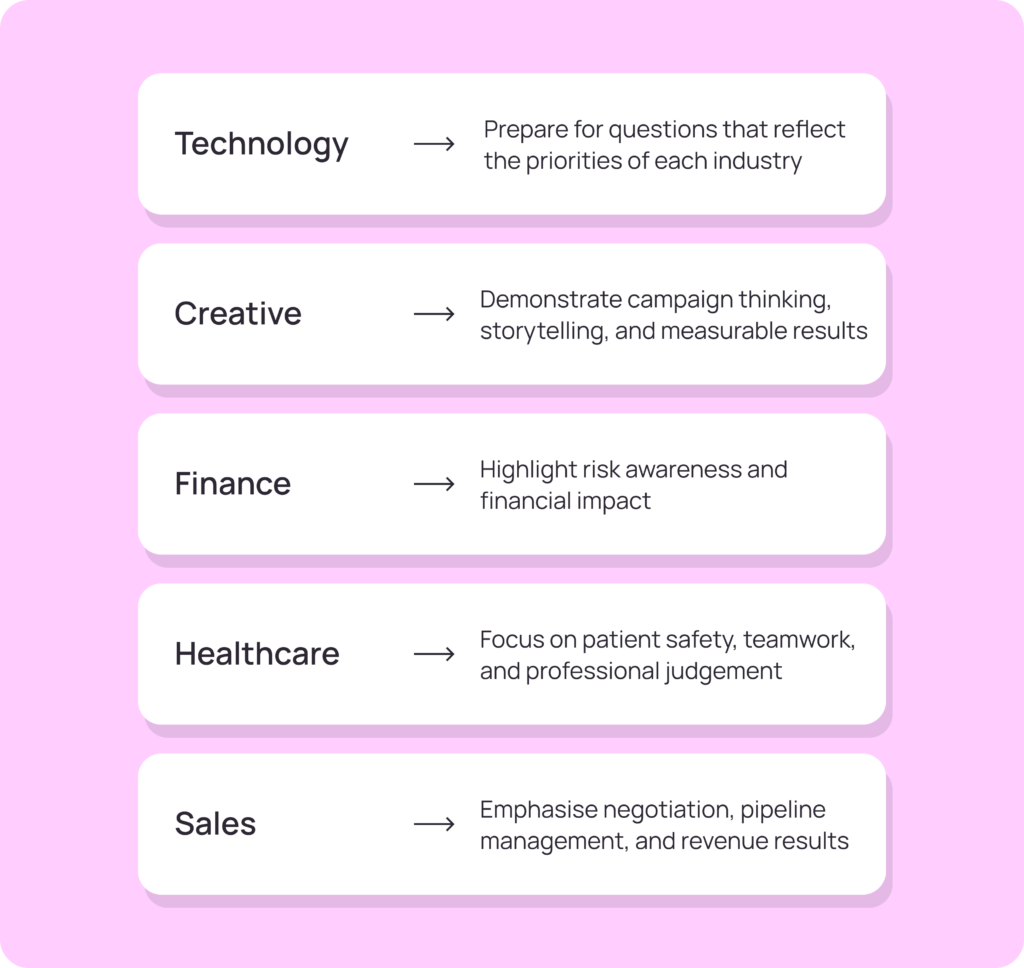
Interview questions vary by sector. Plan to answer these kinds of questions when seeking a new role.
Technology
For tech roles, hiring managers care about agile delivery, problem-solving skills, and cross-team communication. Show you can ship fast, navigate complexity, and bring others with you.
- “Tell me about a time you delivered a project under pressure. How did you keep the team aligned?“
- “Describe a time when requirements changed mid-project. How did you adapt your approach?“
Tips: Be specific about the role you played. And use delivery metrics where you have them, like sprint velocity, release timelines, and defect rates. Career coaching for technology professionals will reveal additional tactics, but now you know where to start in your prep.
Creative
Are you seeking a creative role? Demonstrate campaign leadership, ideation, and client storytelling abilities. Interviewers want to see how you think, not just what you’ve made.
- “Walk me through a campaign you led from brief to delivery. Why did you make these decisions?“
- “Tell me about when a creative concept didn’t land with a client. How did you handle it?“
Tips: When answering the above questions, put a strong focus on outcomes, like reach, engagement, conversions, and client retention. A career coach for creative professionals will push you to connect creative decisions to business results, not just execution quality.
Finance
For finance roles, prepare to answer questions about budgeting, forecasting, and compliance. Hiring managers want to see candidates who demonstrate good judgement and a clear knowledge of risk potential. This is especially true if you’re applying for senior positions.
- “Describe a time you identified a financial risk before it became a problem. What did you do?“
- “Tell me about a forecasting process you improved. What was the impact?“
Tips: Numbers are your friend here—use them with precision. A career coach for finance professionals will help you frame said numbers to highlight positive outcomes.
Healthcare
If you’re seeking a healthcare role, you’ll field questions about patient safety, safeguarding, and teamwork. Interviewers assess clinical competence and interpersonal judgement.
- “Tell me about a time you raised a concern about patient safety. What happened?“
- “Describe when you had to work with a team under pressure. How did you contribute?“
Tips: When answering questions, prioritise patient outcomes and processes you followed to achieve them. A career coach for healthcare professionals will act as a thinking partner and help you frame your experience in a way that demonstrates technical andethical decision-making.
Sales
For a sales role, expect questions about your negotiation techniques, pipeline management skills, and objection handling process. This is true for entry-level sales associate and sales manager positions.
- “Walk me through a deal that nearly fell through. How did you recover?“
- “Describe how you manage pipeline when you’re behind on target. What’s your approach?“
Tips: Career coaching for sales professionals should focus on metrics: conversion rates, revenue delivered, deal size, and retention. Be specific, and own both the wins and the recoveries.
Fairness by design
Good coaching, whether human or AI-powered, should be consistent.
Standardised question sets and rubric-based scoring ensure feedback is fair across sessions. The primary focus should be on the quality of your answers, not your accent, communication style, or background. You should also know how your data is used, and have clear opt out and deletion options.
At Sapia.ai, we built Phai Career Coach on these principles. As such, it operates under the FAIR framework to keep human judgement at the centre of career decisions. Basically, Phai acts as an industry expert and personal sounding board, giving you the tips, tricks, and best practises you need to break out of your comfort zone and achieve your version of success.
Measuring improvement (and staying human)
You’re doing everything your career coach tells you to do—practising interview answers, taking free courses to fill skill gaps, using positive psychology to improve your mental state, etc. Is it working?
Track three things to make sure the training actually benefits you:
- The clarity of your answers
- The strength of your evidence
- Your confidence under pressure
Also, keep reflection notes between sessions. When you have answers you’re proud of, export them for easy use in CVs, applications, and networking conversations.
Where Sapia.ai fits
As alluded to, Sapia.ai’s Phai Career Coach offers structured, interview-first practise for professionals.
The goal? To help people reflect on strengths, articulate experience, and connect insights to real opportunities. That way, they can overcome career-related challenges faster.
Most sessions run 15–30 minutes, and each uses insights from 8+ million real-world chat interviews. So, the education and guidance it provides has genuine empirical grounding.
Just as important, Phai’s rubric-based scoring approach means feedback is consistent, while same-day shortlisting keeps momentum going, andself-scheduling puts you in control of the pace. These features are particularly important for organisations that want to add Phai to job and career pages. Doing so helps potential candidates explore employment options and improves satisfaction.
A 30-minute prep plan for your next role
With the right career coach, you can prepare for your next role in as little as 30 minutes.
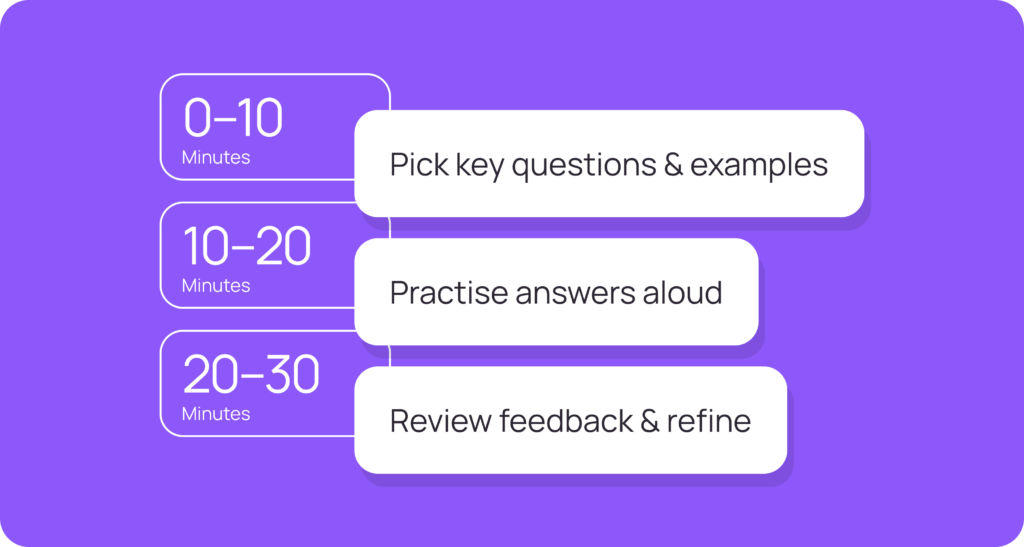
Minutes 0–10
First, review five or six competency-aligned questions that are relevant to your target role. Read them carefully and identify two examples from your experience that you can use in your answers. Make sure the examples you choose have clear outcomes and specific details.
Minutes 10–20
Set a timer and run one practise session. Answer each question out loud, leading with the outcome you achieved, progressing to the actions you took, and ending with context. As you go, note specific metrics that strengthen your answers. Rough figures are better than no figures.
Minutes 20–30
Review the full range of feedback you receive from your coach to see what you can learn. Did you ramble? Did you bury outcomes beneath a mountain of context?
Tighten your answers, update your notes, and schedule your next session. If you feel ready, submit applications to open roles and match your best examples to them.
Common mistakes (and fast fixes)
Even experienced professionals make common interview mistakes. Here’s what to watch for.
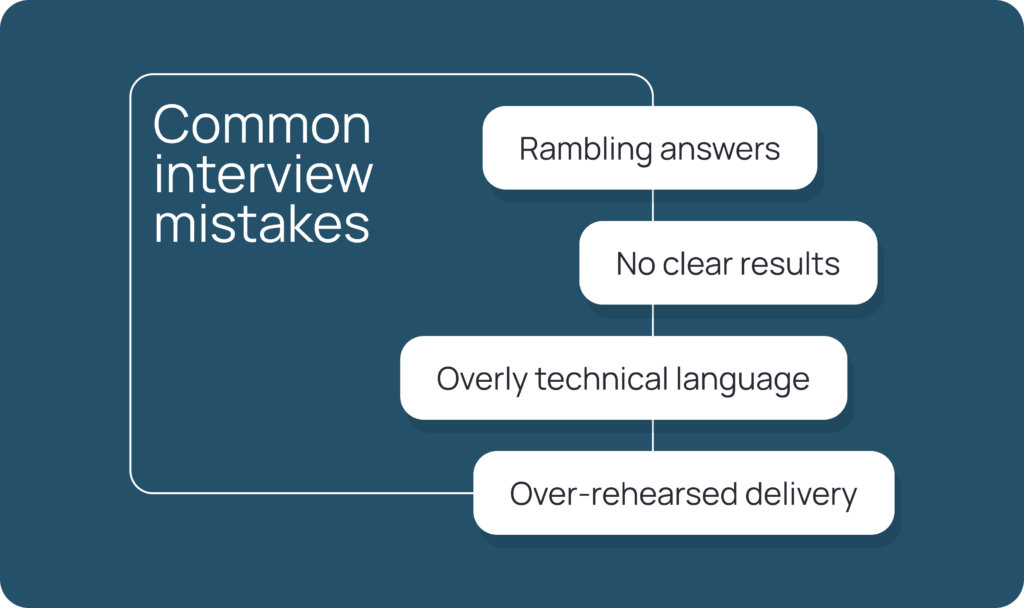
- Rambling. Hiring managers don’t want your life story. When answering questions, start at the decision point and end within two minutes. A concise answer is best.
- No outcome. Every answer needs a result, like a number, a quality improvement, or a customer impact. “I managed the project” isn’t an answer. “I delivered it three weeks early” is.
- Jargon. Not every interviewer is an expert in your field. Because of this, the person you talk to might not understand industry terms. Whenever possible, use plain English.
- Over-scripted tone. Finally, you’re not a machine. Practise aloud, vary phrasing between runs, and resist memorising word-for-word answers. You want to sound prepared, not robotic.
FAQs about coaching sessions for career development
Guided, evidence-based support that helps professionals clarify their goals, close skill gaps, and make confident career moves via structured practise, competency insights, and actionable feedback.
Look for a coach or tool with demonstrable experience in your target sector. Confirm their frameworks reflect real hiring criteria. Sector-specific interview practise is a reliable indicator.
While every person is unique, most professionals notice clearer, more confident answers within two to three sessions. Measurable external progress, like interviews secured and offers received, typically follows within four to six weeks of consistent practise. Start now to enjoy results sooner.
Yes, good coaching sharpens both. It helps you build a positioning story that works across your CV, your LinkedIn profile, and your interview answers. That way, every touchpoint reinforces the same message. It also helps you answer interview questions in the best way possible.
Absolutely. Sector-specific coaching, from career coaching focuses on the competencies, question styles, and outcome metrics that matter most in each field.
About Author