Career change coach: A practical playbook for mid-career switchers

TL;DR:
Do you feel stuck in your career? A career change coach will give you clarity, an honest skills narrative, and a proven structure to help you achieve your dream job in less time.
- What a career change coach does: Provides direction, structured questioning, and accountability so you can move forward with purpose and confidence.
- Why AI career coaches work: They’re available around the clock, more affordable than human coaches, and deliver consistent, personalised guidance instantly.
- There’s a clear process: A simple five-step framework helps you identify your transferable skills, map them to real target roles, and practise interviews in one flow.
What a career change coach does (and when to use one)
Career change coaching is a structured approach that helps job seekers gain clarity, uncover what they’re capable of, and build confidence. A good coach acts as a sounding board, asks the right questions, and holds the job seeker accountable so they take action.
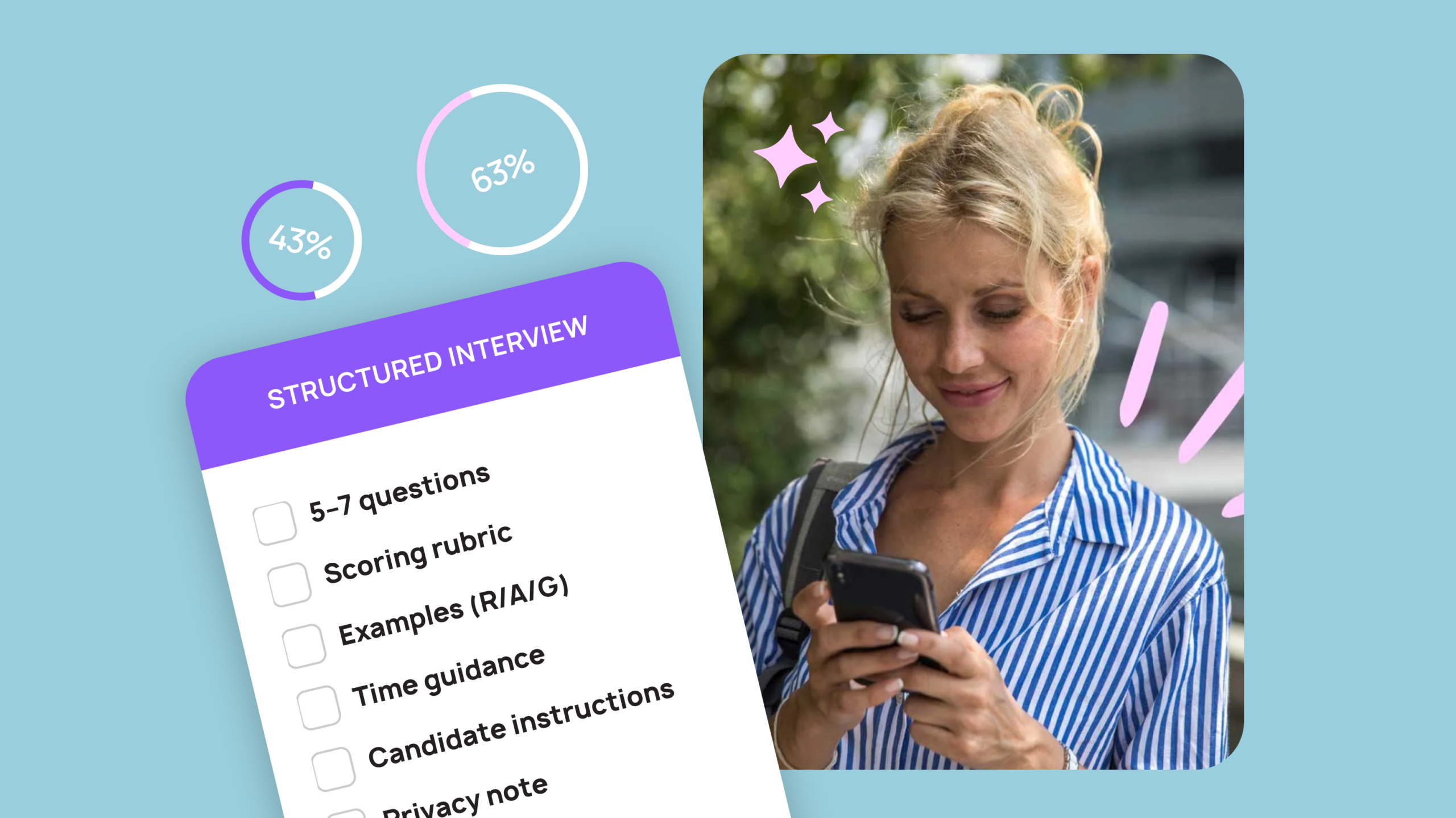
According to our research, 63% of potential career changers feel lost and want a career coach to give them direction. 43% are mid- to late-career professionals. In other words, many people who seek career changes lack clarity and confidence, not job-related skills.
Now, the big question: Are you ready for a new career? The answer might be “yes” if you’ve had multiple jobs in the last few years, give vague answers when people ask about your future plans, or have inconsistent messaging across your CV and LinkedIn profile.
Good news: Career change coaching can help you solve these issues. Within six to eight weeks of personal development, you and your coach will brainstorm realistic role hypotheses, create a clear skills narrative, and build a portfolio of evidence-based examples. You’ll also master the interview process by practising quality answers to common interview questions.
Now, there’s one more thing we need to address… For many people, the best career change coach isn’t human. AI coaches are always available, respond instantly, and cost a fraction of what you’d pay a human coach. Tools like Sapia.ai’s Phai are an excellent example.

Step 1 — Take stock without the soul-searching spiral
Before you do anything else, you need an honest picture of your personal experience. But that doesn’t mean weeks of journalling. Evidence beats introspection every time.
Evidence over introspection
Pull six to eight “impact moments” from the last three to five years of your career. You’re looking for times you saved money, improved quality, increased speed, raised safety standards, or leveled up the customer experience. Highlight your wins in the public or private sector.
Then, translate these wins into portable competencies. Examples include stakeholder management, shift leadership, compliance hygiene, and continuous improvement.
During the translation process, use a three-column structure: The situation → Your actions → A verifiable outcome. This is the raw material for your interviews, CV, and LinkedIn.
Step 2 — Map transferable skills to target roles
Now that you know what you’re capable of, you can match your skills to roles in the nonprofit, small business, government, or corporate world. (Or any industry that makes you happy.)
Right roles, not just right titles
Now, convert your capabilities into role families.
For example, if you have strong people management skills, you might look for an “Operations Lead” or “Contact Centre Team Leader” role. If you excel at compliance-sensitive process work, a job like “Safeguarding Admin,” “Care Coordinator,” or “PMO Associate” might suit you.
For those in the UK, layer in practical considerations like right-to-work requirements, DBS checks, and unionised environments. Then sanity-check against salary bands and commuting patterns. Does the job sound like fulfilling work that meets your needs? If not, move on.
Step 3 — Pressure-test your options quickly
A few target roles don’t equal career transformation. Run a two-week experiment to find out if said roles are actually viable for you. That way, you don’t waste too much energy.
Two-week test-and-learn loop
Book three informational calls with people in your target roles. If you like what you hear, book a job shadow. If you’re still interested, submit two applications with a tailored “why me” for each.
You might be wondering, “How do I know if I should keep pursuing this new field?” Track your response rates, interview conversions, and general enthusiasm. Pursue role families in which 20% of your outreach gets a positive response, or where you land one interview per five targeted applications. If your metrics fall below these numbers, change direction.
Step 4 — Rebuild your story: from identity to value
More than anything, a career change is a narrative challenge. You need to stop defining yourself by your old job title and start articulating your full potential in the professional world.
Your three-line positioning statement
You can overcome the narrative challenge with a simple, three-line positioning statement:
- Line one: What you’re capable of, not a specific job title
- Line two: Two quantifiable wins that prove your capabilities
- Line three: What you want next and why it makes sense for you
Use this positioning statement to refresh your CV. Then, use it to rewrite your LinkedIn headline and About section. That way, your new personal brand is consistent across touchpoints.
Step 5 — Interview-first practice that accelerates offers
You know what roles you want to apply for and have reconstructed your personal brand. Now, it’s time to practice answering questions out loud so you succeed in interviews.
Structured questions, not vibes
Map behavioural and situational questions to your target role family. For instance, practice answering questions related to understaffing and process change if you want a job in Operations. Or questions related to de-escalation and compliance for a leadership position at a Contact Centre. Or questions about safeguarding and confidentiality for a healthcare role.
Throughout the process, aim to give 90 to 120-second answers. During said answers, lead with the outcome achieved, then share the key action you took and the context surrounding it. Finally, practise every day for 10 to 12 minutes, and refine your answers for clarity.
It helps to know what “good” looks like on the employer’s side. Organisations using Sapia.ai run structured interviews with blind, rubric-based scoring and same-day shortlists. Practising to that standard — clear, evidence-led, jargon-free — gives you a real advantage.
Choosing a career change coach in the UK
Whether you’re looking for a London-based career coach for career change or prefer to work with someone online, the principles for vetting these professionals are the same.
Look for someone who specialises in mid-career pivots. Determine which practical artefacts, like CVs, LinkedIn profiles, and interview drills, they help create. And demand transparent outcomes. If the career change coach refuses to give you these things, walk away.
Other red flags include coaches who rely on personality tests but don’t translate results into action, generic homework with no interview drills, and vague timelines without progress checks.
It’s worth mentioning that career change coach London options often command a premium for in-person sessions and access to their vast networks. Remote coaches typically offer better value and more flexible scheduling, without a meaningful drop in quality.
Of course, you can always use an AI career coach. As mentioned, this option is often easier and cheaper, while still providing quality results. Sapia.ai’s AI career coach, Phai, is free.
Money, time, and momentum
You don’t need to leave your current job to start a career change. But you do need to take action as soon as possible. That way, your dream job can become a reality, not just an idea.
A realistic weekly cadence
How do you work toward the next stage in your career? A solid weekly cadence looks like this:
- Two hours building and refining your skills evidence
- Two hours on outreach and informational conversations
- One hour tailoring and submitting applications for open roles
- One hour doing interview practice, so you’re prepared for all questions
You should consider the financial side of your career transition, too. Budget money for accredited courses to fill skills gaps, travel to coaching sessions and interviews, and interview attire. If you’re planning a significant shift, create a contingency fund to cover the gap between roles.
A sample question bank for interview coaching
If you want the job, you have to nail the interview. That’s why you should practise answering common interview questions before you attend a live interview.
Tools like Sapia.ai’s Phia, our free AI-powered career coach, make it easy to prepare for interview questions. How so? Phai will learn about the role you want, then generate questions interviewers might ask and give you feedback on your answers.
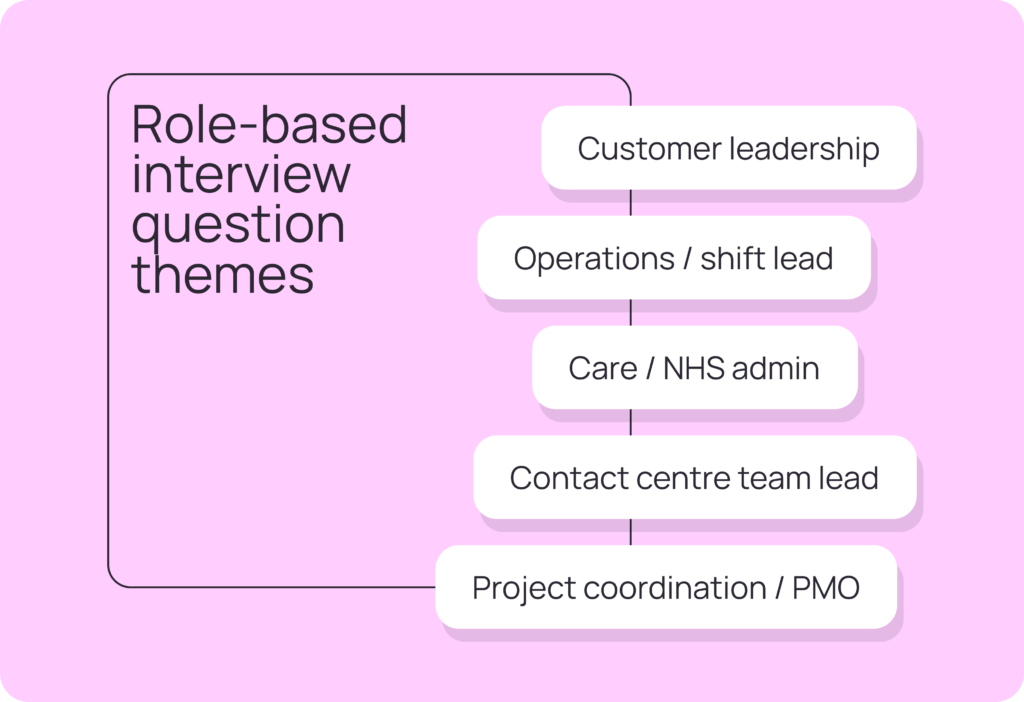
Whether you use Phai or not, you can practise answering these interview questions:
Customer leadership
If you want to lead a customer-facing team, you need the skills to analyse data, reverse poor performance, and manage difficult conversations. Expect questions like:
- “Tell me about a time you turned around poor service metrics.“
- “How have you used customer feedback to change how your team works?“
When answering, lead with the outcome you achieved. Then, explain what you did to get there while avoiding vague statements like “We worked as a team…” Own your wins.
Operations/shift lead
Operations and shift lead roles require composure under pressure, practical problem-solving, and the ability to succeed with minimal resources. Expect questions like:
- “How did you keep a site running during understaffing?“
- “Describe a time you had to change a process without full buy-in from your team.“
Keep your answers grounded in specifics: numbers, timelines, and what you actually decided. Avoid the temptation to discuss how hard things were. Focus on what you did.
Care/NHS admin
Roles in the care and NHS administration industries require a strong knowledge of compliance, confidentiality, and safeguarding procedures. Expect questions like:
- “Describe a time you balanced safeguarding with patient confidentiality.“
- “How have you handled colleagues who don’t follow proper procedure?“
Be specific about the frameworks you applied. By mentioning relevant legislation or organisational policy (without being robotic), you can demonstrate your understanding.
Contact centre TL
If you want to become a contact centre team leader or acquire a similar role, you need to showcase your ability to motivate people and hold them accountable. Expect questions like:
- “How do you improve first-call resolution without harming compliance?“
- “Tell me about a time you coached an underperforming team and improved results.“
As always, make sure your answers lead with a measurable outcome—a higher resolution rate, a better call quality score, fewer complaints, etc. Then explain your method.
Project coordination/PMO
PMO and project coordination roles require clarity, structured thinking, and the ability to manage competing priorities across teams. Expect questions like:
- “Give an example of managing dependencies across teams.“
- “How have you kept a project on track when priorities changed mid-delivery?“
Interviewers listen for evidence of success, not good intentions. When answering their questions, stress the outcomes you achieved more than the processes you used to achieve them.
How coaching sessions lead to better answers
The main difference between a coached and uncoached interview answer is structure and substance. Your career change coach, whether it’s a flesh-and-blood human or the latest AI, will help you structure your answers for clarity and ensure all your answers are substantial.
Here’s a before/after example to prove the benefit of a career coach for mid-career change:
Before: “I was managing the team, and things were getting behind, and there were a lot of complaints coming in, and we kind of worked through it over a few months.“
After: “I reduced the backlog by 32% in four weeks by triaging open cases and retraining two agents on policy handling. Complaints fell from 18 to 5 per week.“
The second answer leads with the outcome, names specific actions, and gives the interviewer something verifiable to hold onto. It’s also free of jargon and delivered with confidence.
A 4-week career transition plan
This 4-week career transition plan will help you on your journey, from the first step to the last:
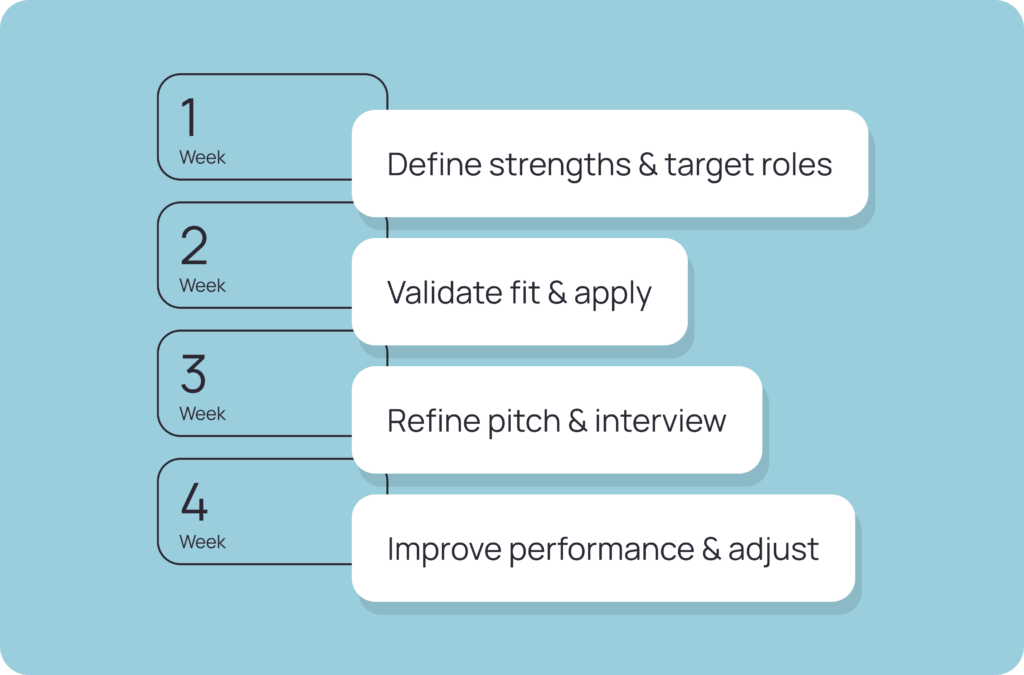
Week 1:
- Complete your evidence inventory using the three-column format
- Shortlist two to three role families that fit your capabilities and interests
- Rewrite your LinkedIn headline and About section using your new positioning statement
Week 2:
- Have three informational conversations with people in your target roles
- Complete two structured practice sets using the question bank above
- Submit three tailored applications, each with a specific “why me” cover letter.
Week 3:
- Refine your positioning
- Send a second round of applications
- Book a mock interview with an AI coach or trusted colleague
- Schedule as many real interviews as you can, then prepare for each
Week 4:
- Focus on interview performance
- Send thank-you notes after each interview
- Review your outcomes honestly and look for areas of improvement
- Adjust your target roles or salary expectations based on what the market tells you
Fairness, bias, and accessibility
You’re ready to discover the next stage of your career and want to make sure you’re prepared. So, you invest in an AI-powered interview tool like Sapia.ai to practice for interviews.
Sapia.ai is a strong option because it prioritises fairness and accessibility while eliminating bias. For example, Sapia.ai offers captions, readable fonts, and mobile-first flows. It also uses plain language to disclose data usage. That way, you always know how we handle your information.
Why does any of this matter? Some tools screen mid-career changers by job title matching. Sapia.ai’s structured approach levels the playing field so you can practise the right way.
Book a demo of Sapia.ai today to explore how our platform can support your career change.
FAQs about career coaches
A career change coach helps you gain clarity, identify transferable skills, and build practical tools you can use to move into a new role with confidence.
Look for a coach who specialises in mid-career pivots, produces tangible outputs, offers interview drills, and sets clear timelines. Also, ask for examples of client outcomes before committing. If you can’t find a human to do these things, use an AI-powered coach like Sapia.ai’s Phai.
Not necessarily. A London-based coach may help with sector-specific networks, but most mid-career switchers don’t need this benefit to succeed. Remote coaching delivers comparable results at a lower cost, while AI-powered coaching often delivers the most bang for your buck.
Start with questions like, “What have I done that I’m proud of, and what did it require of me?” “What would I keep doing even if the pay dropped?” and “What do I enjoy about these roles?“
Most people complete an active career switch after three to six months of focused effort. Discovery and preparation typically take four to eight weeks. The job search itself varies by sector and role family.
In most cases, apply first. Short accredited courses can fill specific gaps, but employers typically care more about transferable evidence than new qualifications. Use the application process to learn what’s actually required, then fill targeted gaps with speedy education options.
About Author