Career coaching: matching transferable skills to real opportunities (UK guide)

TL;DR
- Career coaching services help candidates impacted by redundancy or sector change by mapping skills to tangible roles and improving their career development trajectory.
- Using a scalable, conversational coach like Phai Career Coach accelerates clarity, confidence, and progress. That way, job seekers can secure desired roles faster.
- Evidence-based exercises, structured skill mapping, and interview practise reduce anxiety and improve outcomes, leading to a better future for participants.
- Candidates gain actionable next steps to navigate the competitive UK job market.
What career coaching is (and why it matters)
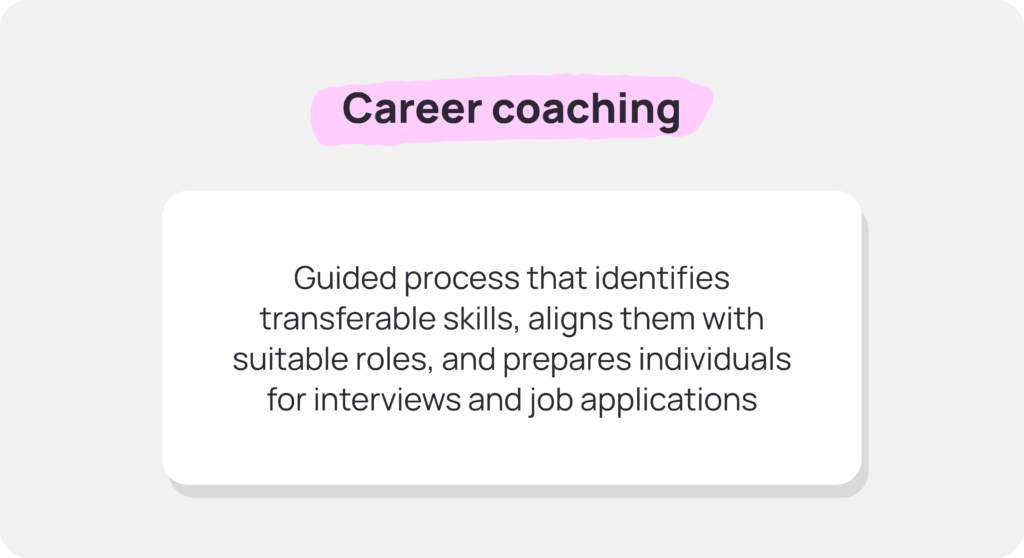
Career coaching is a guided, evidence-driven process that identifies transferable skills, maps them to realistic UK roles, and gives structured practise for interviews and applications.
Many professionals begin their job search from a place of uncertainty. Gaps in confidence and an unclear direction often stall progress before it even begins.
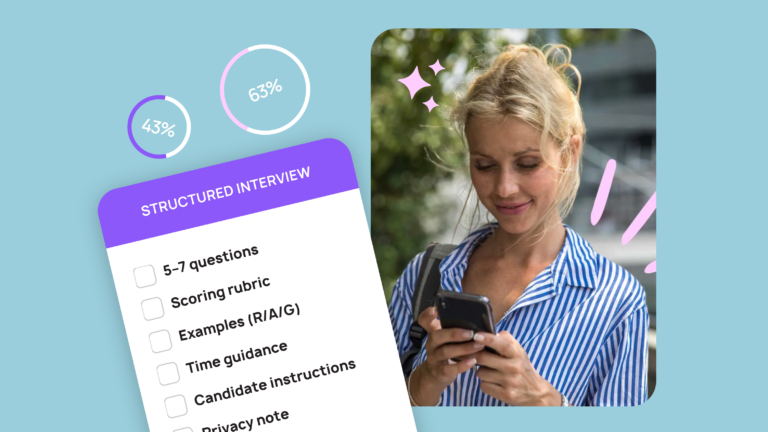
This is a universal problem. According to Phai research, 63% of polled users sought help changing career direction, and 43% were mid- to late-career professionals.
As UK unemployment and redundancy spikes increase competition across sectors, timely careers coaching means faster role alignment, reduced stress, and measurable progress.
How it works: A simple, repeatable coaching loop
Successful career planning requires a structured approach. Once you build it, you can turn past experiences into new opportunities and achieve your career goals.
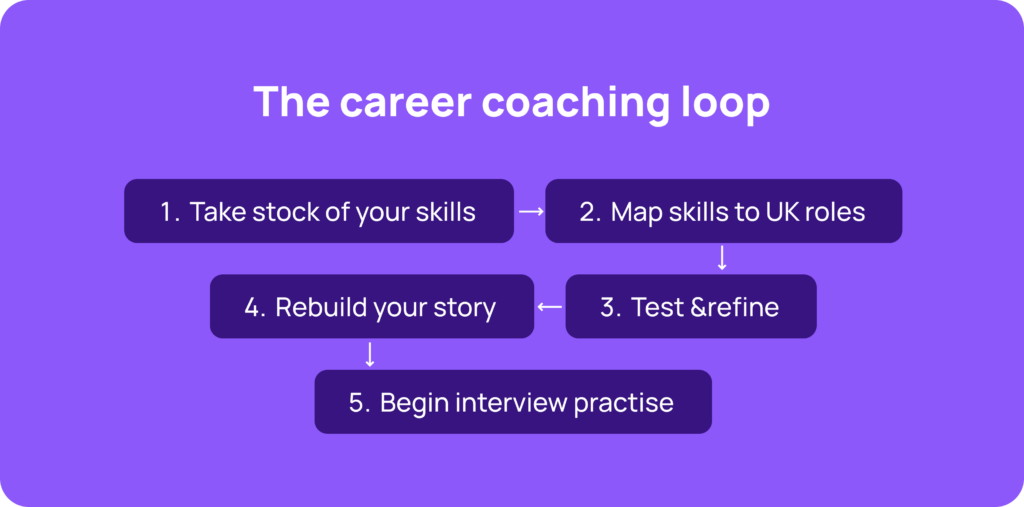
Take stock of your skills
Identify six to eight career impact moments from the past three to five years. Focus on specific metrics you improved, successful outcomes you achieved, etc.
Then, map these moments to transferable capabilities. You may have “managed a store” on paper. But what you actually did was stakeholder management, problem-solving, and process improvement.
Track each example using the Situation, Action, Outcome framework. The results will become the raw material for your CV, LinkedIn profile, and interview answers.
Map skills to UK roles
Next, translate your capabilities into realistic role families like Operations, Customer Success, PMO, or Care and Administration. Make sure you include UK-specific anchors such as sector demand, notice periods, and right-to-work requirements. You should also check for necessary DBS checks, and if the roles exist within unionised environments.
Finally, sanity-check your commuting limits, salary bands, and sector preferences to ensure the plan is sustainable. If you’re still grounded in reality, move to the next step.
Test and refine
Now it’s time to conduct micro-experiments to validate your direction. Aim for three informational calls, some job shadowing, and two to three tailored applications.
Focus on roles that generate positive signals, like at least one interview per five applications (20%). Disregard roles that don’t meet this benchmark unless you’re passionate about the work.
Rebuild your story
Next, create a three-line positioning statement to define your professional identity.
First, list your core capabilities, not past job titles. Second, provide evidence via two quantifiable wins. Third, state your desired next step and explain why it fits your skill set.
Once created, you can use this statement to refresh your LinkedIn headline and CV summary. You can also use it to guide your answers in job applications and live interviews.
Structured interview practise
Finally, engage in behavioural and situational exercises that align with your chosen role family.
When answering questions, lead with the outcome, then explain the action and context within 90-120 seconds. Doing so will keep you from rambling and increase professionalism.
Also, commit to 10-12 minutes of practise per day. During each session, iterate on past performance to improve the clarity and evidence of your answers.
Note: Many UK employers now use platforms like Sapia.ai, which run blind, rubric-based assessments and same-day shortlists. The kind of structured practise described above will prepare you for both human and AI-assisted interview formats.
What “good” looks like: Before and after examples
The difference between a weak answer and a strong one is structure and specificity. Here’s what this looks like in practise:
- Before: “My boss asked me to do something about the company’s low satisfaction scores, and I decided to look into CSAT and NPS software options, but none of them totally fit our needs, so I worked with the team to create a new process too, which worked pretty well.“
- After: “I reduced the backlog by 32% in 30 days, which caused complaints to fall from 18 to 5 per week. Because of this, our customer satisfaction score rose by 10 points. I achieved this by investing in new software and developing a proprietary process.“
As you can see, the first answer rambles. Worse, it only describes general responsibilities; it does not specify results or processes. The second answer, on the other hand, leads with impact, explains the actions that led to the result, and maintains complete professionalism.
UK-specific guidance candidates use to make a career change
The UK job market has sector-specific considerations that generic career advice tends to miss.
- NHS: Focus on values-based recruitment and clinical governance.
- Retail: Highlight flexibility, peak period management, and inventory accuracy.
- Councils: Emphasise public service ethics and budget accountability.
- Care providers: Prioritise safeguarding knowledge and person-centred care.
No matter what role you apply for, prepare your right-to-work evidence and understand your notice periods. For roles in education or healthcare, update your DBS checks.
Worth mentioning, the best career development platforms offer captions, screen-reader compatibility, low-bandwidth modes, and free practise paths. That way, candidates at every stage, skill level, and income bracket can access the same quality of support.
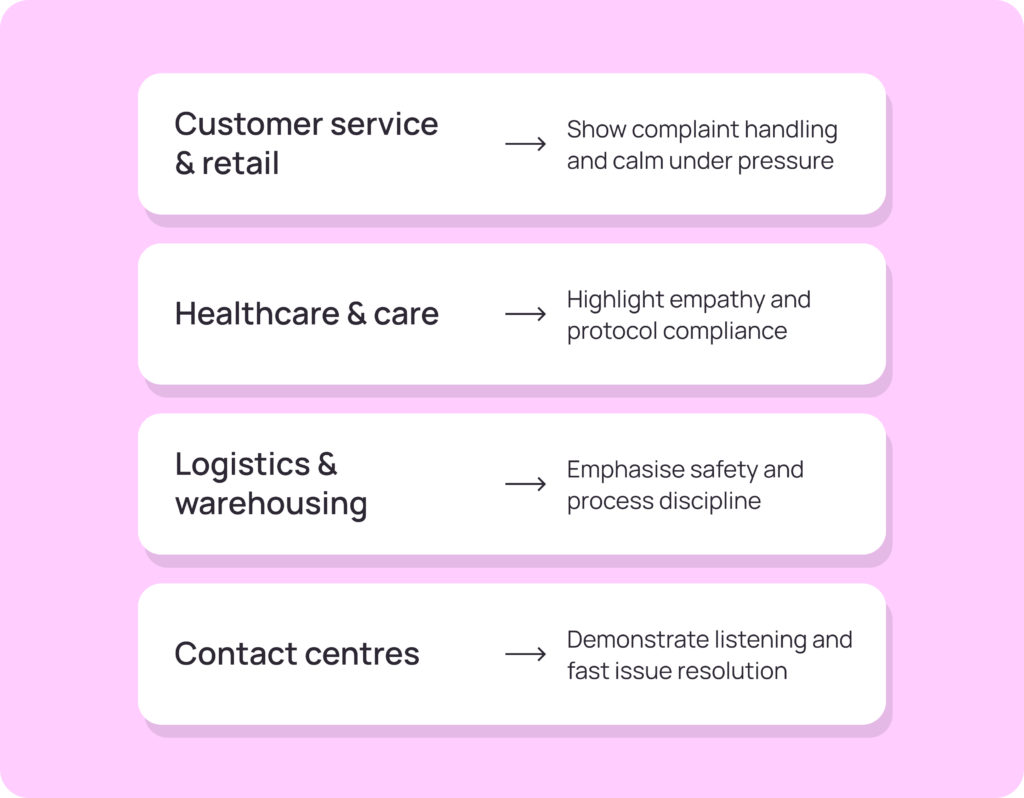
Practise scenarios during your job search (by role family)
Practising realistic scenarios will help you develop confidence and reach peak performance. Here’s how to approach different sectors during your interview preparation.
Customer service and retail
Interviewers care about de-escalation skills, queue management, and effective complaint resolution. They want to see if you can remain calm while helping a frustrated customer.
- “Tell me about a time you handled a difficult customer complaint effectively.“
- “How do you manage tasks when the shop floor or service desk is extremely busy?“
Anchor your answers in specific moments. If you boosted a customer feedback score or helped reduce complaint volumes, highlight the specific numbers.
Healthcare and care
Interviewers focus on safeguarding, confidentiality, and your ability to work within a team, particularly under pressure. They need to know you follow strict protocols to keep people safe.
- “Can you describe a time when you had to follow a strict protocol to ensure safety?”
- “How do you maintain a patient’s dignity while providing them with sensitive care?”
Use examples that highlight your empathy and your adherence to professional standards. Show that you understand the importance of teamwork in a high-stakes environment.
Logistics and warehousing
Interviewers prioritise safety, shift handovers, and continuous improvement. Employers want people who know how to follow rigorous processes with excellent efficiency.
- “Describe a time you identified a safety hazard and what action you took to resolve it.”
- How do you make sure you don’t miss anything during handovers—what’s your process?”
Emphasise your reliability and your attention to detail. Logistics managers value candidates who proactively look to make processes safer and/or faster. If you hold relevant certifications, like a forklift licence, or received manual handling training, make it known.
Contact centres
Interviewers look for active listening, your ability to follow compliance scripts, and first-call resolution rates. They need people who can handle high volumes while maintaining quality.
- “Tell me about a time you resolved an issue in a single call. What made that possible?”
- “Describe a situation where you had to follow a set process but still needed to use your judgment. How did you handle it, and would you do anything different?”
Demonstrate your ability to transition from speaking to data entry. Also, highlight your resilience and ability to meet key performance indicators to stand out from other applicants.
Improve your interview answers today. Try Sapia.ai’s Phai Career Coach for free and get structured, conversational guidance to make your next career move with confidence.
Fairness by design (not by vibe)
Tools like Sapia.ai use standardised question sets and rubric-based scoring to reduce inconsistency. They focus on the content of your answers, not your level of polish or “vibe.“
In addition, these tools have built-in guardrails to prevent biased phrasing, which ensures every job seeker receives a fair evaluation. They also prioritise transparent data use, with clearly visible opt-out and deletion paths for individual information.
Why does any of this matter? If you’re using an AI career coaching tool, you can trust the advice it gives you. If you’re applying for a role that uses AI throughout the hiring cycle, you can trust that the process is fair and the tool will handle details about your personal life with care.
Measuring improvement (and staying human)
Are you moving closer to your career goals? You can track your own progress via candidate-visible metrics like answer clarity, evidence strength, and time management.
Plus, a quality coaching process will include reflection notes and confidence check-ins to maintain a human-supportive tone—even if your coach is an AI-powered software.
Lastly, once you’ve refined your responses, you can export your top answers to use in your CV, cover letters, online applications, and networking conversations.
Where Sapia.ai fits: Interview coaching and career guidance
Sapia.ai’s Phai Career Coach offers interview skills development and broader career planning.
Built on millions of chat interviews, it brings the same structured, conversational approach that employers use to run fair and consistent hiring processes, and turns it into candidate support.
For job seekers, this means embedded interview practise that’s accessible from careers pages, structured question formats, fair scoring, and same-day shortlisting. Put simply, our platform supports every step, from the first training session to final interview preparation.
Schedule a free demo to see how Phai Career Coach can help you in your career journey.
A 90-day career coaching plan if you feel stuck
Your new career is closer than you think. This plan will take you from uncertainty to active progress—and it will do it in 90 days or less. Here are the details:
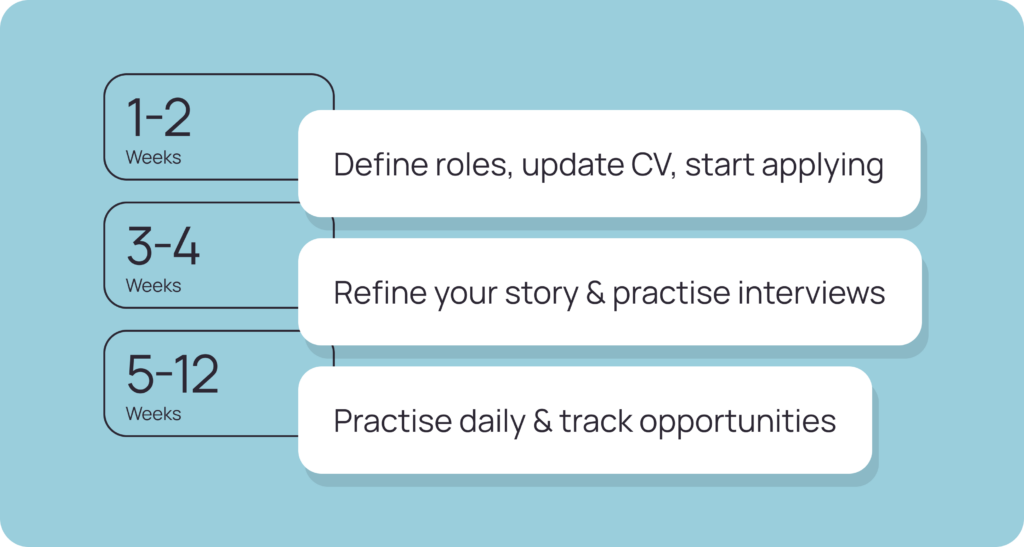
Weeks 1–2
First, document six to eight career impact moments, shortlist two to three role families, and refresh your LinkedIn profile and CV. Then, run three informational chats, complete two to three practise interviews, and submit two to three tailored applications for desired roles.
Weeks 3–4
Next, take time to refine your positioning story. Then, begin a second round of applications and complete a mock interview. When applicable, book real interviews with professional companies. Use the information you glean in your career coaching sessions to make a good impression.
Weeks 5–12
Finally, commit to daily, structured practise and iterate on examples. Then, track your personal interview rate, callback rate, and feedback themes. By week 12, you should have a shortlist of active opportunities. If not, review your role targets and adjust.
Common mistakes (and fast fixes)
You’ll dramatically improve your success rate if you avoid these common pitfalls:
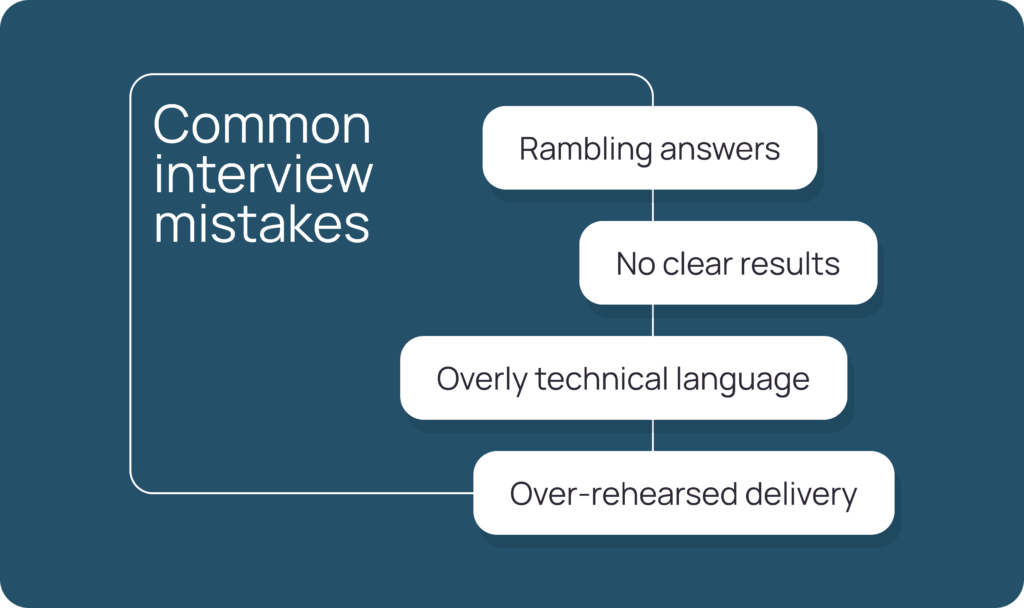
- Rambling: Most candidates speak words but never make an impact. Instead, start at the decision point of your story and keep your answers between 90 and 120 seconds.
- No outcome: Some answers describe tasks but not results. To fix this, focus on metrics, like improved customer satisfaction, increased speed, lower costs, or better safety.
- Jargon: Recruiters don’t always understand technical language. So, assume panel members are not specialists in your field and answer questions in plain English.
- Over-scripted tone: You’re not a robot. Practise your interview answers, but vary your phrasing so you don’t sound too rehearsed. As long as the structure of each answer remains intact, you’ll appear professional and enable interviewers to connect with you.
FAQs about career coaching sessions
Career coaching is a guided, evidence-based process that helps identify transferable skills, map them to suitable roles, and practise interview techniques. It provides structure and confidence to navigate career transitions, especially after redundancy or when seeking a new direction.
Look for a coach or platform that uses data-driven insights and structured frameworks. Make sure they understand the UK job market and offer practical tools like interview practise and skill mapping. Good executive coaching provides measurable progress and actionable feedback to accelerate job searches.
No. While you might search for a “career coach London” on Google or in ChatGPT, digital platforms like Sapia.ai allow you to access high-quality coaching from anywhere. In fact, online tools offer the same tailored advice, evidence-based exercises, and practise scenarios as in-person sessions—often at a much lower price. As such, they provide flexibility for job seekers across the UK.
A mid-career switch typically requires focused effort over several months. Following a structured 90-day plan helps inventory skills, test new role families, and refine interview performance. The exact timing depends on your sector choice and your commitment to daily practise.
You should first identify your transferable skills and map them to roles to understand gaps. Often, existing capabilities qualify candidates for their next job immediately. If a specific role requires new skills or a certification, you can retrain while you apply and network to build industry awareness.
Yes. Career coaching provides frameworks to rebuild CV summaries and LinkedIn headlines around core capabilities, key responsibilities, and quantifiable wins. It also offers structured practise for behavioural and situational interviews, which will help you deliver clear, high-impact answers that demonstrate your value to potential employers.
About Author